
✔ Fact-checked. For informational purposes only.
Cats are evolutionary masters of disguise. In the wild, showing weakness makes a predator a target, so domestic cats have retained a biological imperative to mask pain and anxiety. This stoicism is why many cat owners are blindsided when their seemingly healthy pet suddenly develops serious behavioral issues like urinating on the carpet or aggressive scratching. These are not sudden rebellions; they are the final screams of a silent crisis that has been building for months or even years.
The hidden stress signals of a cat are subtle, biological, and often undetectable to the naked eye. However, chronic stress triggers a release of cortisol that physically damages a cat’s bladder, kidneys, and immune system over time. This guide explores how modern smart home technology can peel back the curtain on feline health, allowing you to detect and resolve anxiety before it becomes a medical emergency.
The Problem: The “Tipping Point” of Feline Anxiety
Most owners only recognize stress when it manifests as a behavior problem. But by the time a cat refuses to use the litter box, they have likely been suffering from chronic anxiety for a long time. This condition is often diagnosed as Feline Idiopathic Cystitis (FIC)—a sterile inflammation of the bladder caused entirely by stress hormones.
The signals preceding this “tipping point” are microscopic changes in routine:
- Micro-Sleep Changes: A stressed cat doesn’t just “sleep more”; they “feign sleep” (vigilant resting) or withdraw to high/hidden places to avoid interaction.
- Grooming Deviations: Over-grooming (psychogenic alopecia) often starts on the belly where owners rarely look, or grooming stops entirely due to depression.
- Resource Avoidance: A cat might wait until the house is empty to eat or drink to avoid crossing paths with another pet.
Benefits of Digital Bio-Monitoring
Using smart technology to monitor cat stress signals shifts your care model from “reactive” (cleaning up accidents) to “proactive” (managing mental health). The benefits are tangible:
1. Prevention of Expensive Medical Conditions
Treating a blocked urethra or severe FIC can cost thousands of dollars in emergency veterinary care. Detecting a 15% drop in water intake or a change in litter box frequency allows for early, low-cost interventions like diet changes or pheromone therapy.
2. Objective Data for Vets
Vets rely on owner observation, which is notoriously flawed. Telling a vet, “He seems quiet,” is vague. Showing a vet a graph indicating “Sleep quality dropped by 30% and litter box visits doubled last week” provides a diagnostic roadmap.
3. Multi-Cat Peacekeeping
In households with multiple cats, tension is often invisible. Smart tech can identify which cat is bullying the other away from resources, allowing you to separate their territories effectively.
Device Categories: The Silent Observers
To detect these hidden signals, you need devices that track biology and behavior without disturbing the cat.
1. Smart Litter Boxes (The “Biometric Lab”)
The litter box is the most critical diagnostic tool for cats.
Key Function: Devices like the Litter-Robot 4 or Petivity Smart Monitor track the weight of the cat and the frequency of visits.
The Signal: If a cat visits the box 10 times a day but leaves no waste, they are likely straining (a medical emergency). If they stop covering their waste, it may indicate territorial insecurity.
2. Health & Activity Wearables (The “Sleep Detective”)
While cats dislike heavy collars, lightweight trackers are essential for outdoor or active cats.
Key Function: Trackers like Whistle or Maven monitor scratching (a sign of anxiety-induced itching) and sleep quality.
The Signal: A healthy cat sleeps deeply. A stressed cat has “fragmented” sleep, waking up constantly to scan the room. Wearables graph this restlessness clearly.
3. AI-Powered Cameras (The “Behavior Analyst”)
Standard security cameras record motion; AI cameras analyze it.
Key Function: Cameras like the Furbo 360° Cat Camera or Petcube can distinguish between “playing” and “fighting” or detect “pacing” behavior.
The Signal: If your cat spends 4 hours a day staring at the back door or pacing the hallway, they may be reacting to a neighborhood stray cat you have never seen.
Buying Guide: Critical Features for Cat Monitoring
When selecting technology to uncover cat stress signals, focus on these specifications:
- Weight Sensitivity: For litter monitors, the scale must be sensitive enough to detect the difference between a urination (small weight change) and defecation.
- Multi-Cat ID: If you have two cats, the system must be able to distinguish them (usually via weight profiles or microchip scanning like the SureFeed system).
- Battery Life vs. Size: For wearables, smaller is better. A bulky collar causes stress, defeating the purpose. Look for devices under 1 ounce.
- Silent Operation: Cats are sensitive to motor noises. Ensure smart feeders and litter boxes are “whisper quiet” to avoid becoming new stressors.
Frequently Asked Questions (FAQ)
Can stress really cause physical illness in cats?
Yes. Stress is the leading cause of Feline Lower Urinary Tract Disease (FLUTD). The bladder wall contains nerves that release inflammation when the brain senses threat, leading to pain and bleeding without any bacteria present.
Do smart litter boxes work for multiple cats?
Yes. Most advanced models distinguish cats by their weight. If your cats are very similar in weight, you may need a microchip-activated feeder or door to track them individually.
How do I know if my cat is just lazy or lethargic?
Lethargy is a lack of energy; laziness is a choice. A “lazy” cat will still wake up for food or play. A lethargic cat (often a sign of pain or depression) will ignore stimuli they usually enjoy. Activity trackers quantify this difference.
My cat hides a lot. Is that normal?
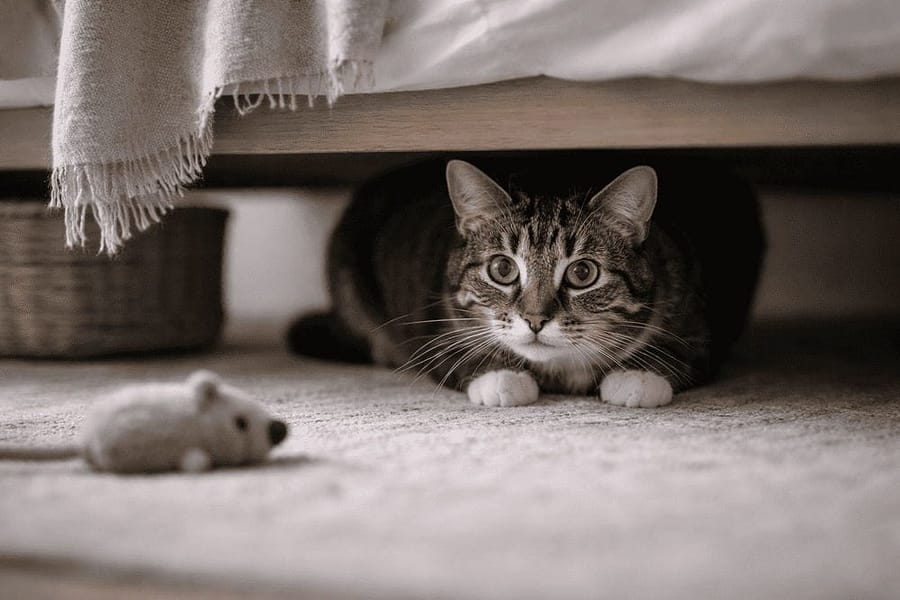
Hiding is a coping mechanism. While some cats are shy, a sudden increase in hiding—especially in a new spot like a closet or under a bed—is a red flag for pain or acute anxiety.
What is the best way to reduce cat stress?
Stability and vertical space. Cats feel safe when they are high up. Adding “cat shelves” or tall trees allows them to survey their territory. Consistency in feeding times (helped by smart feeders) also reduces resource anxiety.
Conclusion
The “aloof” nature of cats is a myth; they are deeply sensitive creatures who internalize their environment. By the time a behavior problem appears, the cat has been shouting for help in a language we often fail to hear. By employing smart litter monitors and health trackers, you can decode these hidden stress signals years in advance. This data-driven approach transforms you from a pet owner into a pet guardian, ensuring your feline companion feels safe, understood, and truly at home.
📚 Veterinary Behavior References
-
The Ohio State University (Indoor Pet Initiative):
Understanding Cat Behavior & Stress Stressors
(The gold standard for indoor cat environmental enrichment) -
Cornell Feline Health Center:
Feline Behavior & Aggression Signals
(Clinical breakdown of stress-induced behaviors) -
International Cat Care (iCatCare):
Recognising Stress in Cats
(Visual guides on feline body language)
Disclaimer
This information is for educational and informational purposes only and does not constitute professional advice. Always consult with a qualified professional before making any decisions based on this content.
About the Expert
Evelyn Foster
Leading Scientific Expert & Senior Editor, Pets & Pet Care at FactaHub
Evelyn Foster is FactaHub’s key specialist, responsible for the scientific accuracy and ethical direction of all content within the Pets & Pet Care category. Her role involves rigorous fact-checking and integrating the latest research in zoopsychology, behavioral medicine, and comparative animal nutrition into practical guides for our readers.
Evelyn has over 15 years of experience working with data concerning domestic animal welfare and behavior.
- Experience: For many years, she collaborated with non-profit animal rescue and rehabilitation organizations, developing protocols for the assessment and correction of complex behavioral issues.
- Specialization: She specializes deeply in the ethology of cats and dogs, as well as the evaluation of clinical trials for dietary supplements and pet foods.
- Publications: She has served as an author-consultant in the creation of educational materials for pet owners and junior veterinary staff.
Important Disclaimer
Evelyn Foster is a leading scientific expert in animal ethology and behavioral medicine. However, she is not a licensed Doctor of Veterinary Medicine (DVM). Content published under her editorial and scientific oversight is intended strictly for educational and informational purposes and should never replace a personal examination, diagnosis, or treatment provided by your qualified veterinarian. For all questions concerning your pet’s health, please contact a veterinary clinic immediately.