
✔ Fact-checked. For informational purposes only.
For many cat owners in the United States, the decision to keep their feline companions inside is driven by a desire for safety. While indoor living protects cats from the dangers of traffic and local predators, it creates a unique psychological challenge: the “stagnant environment.” Without the varied stimuli of the outside world, domestic cats often suffer from chronic boredom, which can lead to behavioral issues and stress-related health problems. Prioritizing indoor cat mental enrichment is no longer an optional luxury; it is a critical component of responsible pet ownership in the modern age. By leveraging smart home technology, owners can simulate the complexities of nature, ensuring their cats remain sharp, active, and emotionally balanced.
The Hidden Problem: Boredom and the Indoor Predator
The domestic cat is a biological marvel designed for the “seek-and-pounce” cycle. In the wild, a significant portion of a cat’s day is spent navigating complex territories and hunting small prey. In a typical American household, this instinct has nowhere to go. This lack of indoor cat mental enrichment often leads to what veterinarians call “displacement behaviors,” such as over-grooming, excessive vocalization, or unprovoked aggression toward owners. When a cat’s mind is underutilized, they may begin to view household movements—like a person walking down a hallway—как “prey,” leading to accidental scratches and bites.
Furthermore, the absence of mental challenges can accelerate cognitive decline in senior cats. Just as humans are encouraged to solve puzzles to maintain brain health, felines require environmental “puzzles” to keep their neural pathways active. Relying solely on a window view is often insufficient, as the static nature of a residential street doesn’t provide the high-frequency interaction a predatory brain requires for true satisfaction.
The Stress of a Predictable Life
While humans crave stability, a cat’s brain thrives on a certain degree of “managed novelty.” A life that is too predictable can actually lead to a state of learned helplessness. Without the opportunity to make choices or solve problems—such as how to extract food from a difficult space—cats can become lethargic. This physical inactivity, coupled with mental stagnation, is a primary contributor to the feline obesity epidemic currently affecting millions of U.S. households.
The Benefits of a Stimulating Smart Home
The primary benefit of integrating technology into indoor cat mental enrichment is the ability to provide consistent interaction during the hours owners are away at work. Smart gadgets can be programmed to trigger at random intervals, breaking the monotony of the day and encouraging the cat to patrol their territory. This keeps the metabolism high and the mind engaged, mirroring the unpredictable nature of an outdoor environment.
Moreover, a stimulating home environment significantly reduces separation anxiety. When a cat has a “job” to do—such as interacting with a smart feeder or tracking a robotic toy—they are less likely to focus on the absence of their human companions. This leads to a more harmonious household and a pet that is calmer and more affectionate when the family returns. The transition from a “furniture-bound” cat to an active participant in their environment is one of the most rewarding aspects of smart home pet integration.
Device Categories for Feline Enrichment
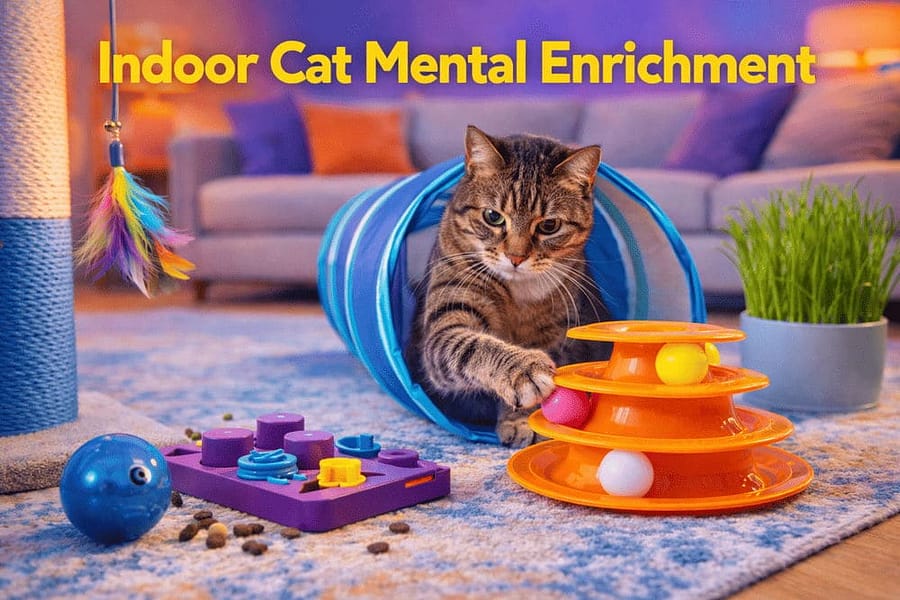
To build a comprehensive ecosystem for indoor cat mental enrichment, owners should consider a multi-sensory approach. Cats interact with the world through sight, sound, scent, and touch. The following categories represent the most effective smart solutions currently available.
- Automated Prey Mimics: Devices like the Enrichment Ball or robotic mice that change direction when touched. These require the cat to strategize their “attack” rather than simply chasing a predictable light.
- Smart Puzzles and Feeders: Technology that requires the cat to solve a digital or mechanical problem to release a kibble. This mimics the “work” of hunting and slows down eating for better digestion.
- Visual Enrichment Systems: High-definition screens or smart projectors specifically tuned to feline color vision, displaying high-contrast images of birds and rodents.
- Climbing and Vertical Space Automation: Smart cat trees with integrated sensors that trigger sounds or small movements when the cat reaches different levels.
- Scent-Based Enrichment: Automated diffusers that can release small, safe amounts of silvervine or catnip scents at scheduled times to encourage exploration of different rooms.
Buying Guide: Selecting Enrichment Tools That Last
When shopping for indoor cat mental enrichment tools, U.S. adults should look for “ruggedized” technology. Cats are remarkably efficient at dismantling poorly made toys. For those aged 35–70, the priority should be on devices that offer app-based scheduling and low maintenance. Ensure that any electronic toy has an “auto-shutoff” feature to prevent over-stimulation and to preserve battery life.
Prioritize devices that are Matter-compatible or easily integrated with Alexa/Google Home for centralized control. Look for “silent” motors; many high-tech toys produce a high-pitched whine that can be distressing to a cat’s sensitive ears. Finally, choose products with a randomized algorithm. If a toy follows the same path every time, the cat will “solve” it within a week, and the enrichment value will drop to zero. Variability is the secret to long-term interest.
Safety and Supervision
While automated toys are designed for independent play, the first few sessions should always be supervised. Ensure that smart toys have no small, detachable parts that could be swallowed. For laser-based devices, choose models that are safety-certified and programmed to point downward to avoid direct eye contact. A safe smart home is one where the technology enhances welfare without introducing new hazards.
Frequently Asked Questions
How many hours of enrichment does an indoor cat need?
Most experts recommend at least 30 to 60 minutes of “active” enrichment per day. This doesn’t have to be all at once; short bursts of 5-10 minutes of smart toy interaction throughout the day are often more effective.
Can a cat have too much stimulation?
Yes. Over-stimulation can lead to “zoomies” that turn into aggression or anxiety. It is important to use your smart home’s scheduling feature to ensure there are “quiet hours” where the cat can rest undisturbed.
Are smart toys better than traditional feather wands?
They serve different purposes. Smart toys provide enrichment when you aren’t home, but they don’t replace the social bonding that happens during one-on-one play with a manual wand toy.
My cat ignores new toys; is smart tech a waste?
Not necessarily. Cats are often “neophobic” (afraid of new things). Try introducing the device off, then on at a low setting, and use high-value treats to create a positive association with the machine’s movement.
Conclusion: The Future of Feline Welfare
The modern indoor cat lives in a world of unprecedented safety, but it is a world that can be tragically small. Addressing indoor cat mental enrichment is the key to expanding their horizons without ever opening the front door. By integrating intelligent feeders, reactive toys, and sensory-rich environments into our smart homes, we fulfill a deep biological promise to our pets. We provide them with the dignity of the hunt and the joy of discovery. As technology continues to evolve, our ability to care for the “whole cat”—both body and mind—will only improve, leading to longer, happier, and more vibrant lives for our feline family members.
📚 Veterinary Behavior & Enrichment References
- The Ohio State University (Indoor Pet Initiative):
Basic Indoor Cat Needs
(The world-leading veterinary program on preventing stress-related illness (like FIC) through environmental design) - AAFP (American Association of Feline Practitioners):
Feline Environmental Needs Guidelines
(The “5 Pillars” of a healthy home environment, defining essential resources like vertical space and hunting simulations) - International Cat Care (iCatCare):
Making Your Home Cat Friendly
(Expert advice on resolving inter-cat conflict and boredom in multi-cat households)
Disclaimer
This information is for educational and informational purposes only and does not constitute professional advice. Always consult with a qualified professional before making any decisions based on this content.
About the Expert
Evelyn Foster
Leading Scientific Expert & Senior Editor, Pets & Pet Care at FactaHub
Evelyn Foster is FactaHub’s key specialist, responsible for the scientific accuracy and ethical direction of all content within the Pets & Pet Care category. Her role involves rigorous fact-checking and integrating the latest research in zoopsychology, behavioral medicine, and comparative animal nutrition into practical guides for our readers.
Evelyn has over 15 years of experience working with data concerning domestic animal welfare and behavior.
- Experience: For many years, she collaborated with non-profit animal rescue and rehabilitation organizations, developing protocols for the assessment and correction of complex behavioral issues.
- Specialization: She specializes deeply in the ethology of cats and dogs, as well as the evaluation of clinical trials for dietary supplements and pet foods.
- Publications: She has served as an author-consultant in the creation of educational materials for pet owners and junior veterinary staff.
Important Disclaimer
Evelyn Foster is a leading scientific expert in animal ethology and behavioral medicine. However, she is not a licensed Doctor of Veterinary Medicine (DVM). Content published under her editorial and scientific oversight is intended strictly for educational and informational purposes and should never replace a personal examination, diagnosis, or treatment provided by your qualified veterinarian. For all questions concerning your pet’s health, please contact a veterinary clinic immediately.