
✔ Fact-checked. For informational purposes only.
Introduction: The AI Shift—From Reactive Tools to Proactive Intelligence
The current landscape of Artificial Intelligence, dominated by Large Language Models (LLMs) and basic voice assistants, represents the baseline of innovation. While these tools have transformed information retrieval, they remain largely reactive, awaiting a human prompt before executing a simple, pre-defined task. The next generation of AI is fundamentally different: it is defined by true autonomy and computational efficiency modeled on biological processes.
This paradigm shift is driven by three converging technologies: the self-directing capabilities of Agentic AI, the ultra-efficient architecture of Neuromorphic Computing, and the seamless integration of Generative AI into household appliances. Together, these elements are creating a truly “smart” and proactive living environment where technology anticipates needs and manages complex systems independently.
Agentic AI: The Rise of Autonomous Home Management
What is Agentic AI?
Agentic AI systems move beyond traditional automation scripts. They are designed to autonomously define complex goals, break those goals down into multi-step action plans, execute those steps, and critically, course-correct when initial steps fail—all without continuous human oversight. This represents the shift from tools that assist to systems that act on their own.
Real-World Home Applications
The most tangible impact of Agentic AI is its ability to orchestrate complex home functions.
- Proactive Maintenance: An Agentic system monitoring your home’s infrastructure could detect subtle anomalies in the HVAC unit (e.g., a slight change in the compressor’s acoustic signature). The agent autonomously diagnoses a predicted pump failure, searches for the correct replacement part, schedules a certified technician for the repair, and handles the electronic payment upon completion. The homeowner only receives a final confirmation notice.
- Orchestration Layer: Agents function as a central cognitive layer, seamlessly connecting and coordinating previously disparate devices (security, energy management, entertainment) across various protocols for optimized, end-to-end efficiency.
The Autonomy Spectrum and Challenges
The transition to true autonomy raises technical hurdles, primarily centered on standardization. For Agentic AI to function optimally, device-to-device communication (A2A) must be robust, and clear ethical guidelines regarding autonomous decision-making in the residential space must be established.
Neuromorphic Computing: Powering Intelligence at the Edge
Why the Brain is the New Chip Design
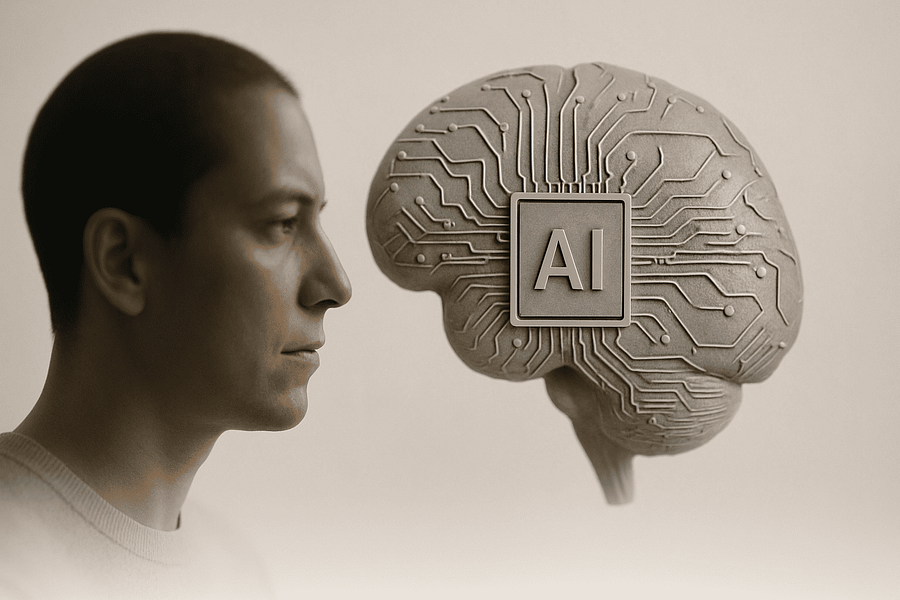
Current processors rely on the von Neumann architecture, separating memory and processing, which leads to slow data transfer and high energy consumption (the “von Neumann bottleneck”). Neuromorphic computing mimics the brain by co-locating memory and processing, using event-driven “spikes” instead of continuous clocks. This architecture drastically reduces power consumption and achieves near-zero latency.
Enabling Smart Wearables and Health Monitoring
The low-power, high-efficiency benefits of Neuromorphic Computing are critical for wearables.
- Wearables can now perform continuous, real-time biosignal monitoring (e.g., EEG, ECG analysis) for weeks on a single charge.
- Privacy Advantage: Because processing is done on-device (Edge AI), sensitive health data can be processed and summarized locally, significantly reducing the security risk associated with constantly transmitting raw data to the cloud.
Generative AI Appliances: The New Interface for Home Knowledge
Beyond Simple Search and Voice Commands
The Generative AI Smart Search Appliance represents the next leap past simple voice control. These systems use large generative models to understand complex intent and synthesize creative, customized responses rather than merely retrieving information.
Example Use Case:
Instead of asking, “What is the weather?” users can instruct: “Based on the ingredients I have, the custom mood lighting I set for the evening, and my preferred wine pairing, draft a custom dinner menu, generate the grocery list for the missing ingredients, and set the oven to preheat at the correct time.”
Personalization and Synthesis
These appliances are designed to synthesize information, utilizing context-aware learning to provide tailored outputs. This is evident in features like AI-generated personalized recipes or proactive, customized appliance cycles based on usage patterns.
Market Outlook and Growth
We are moving toward a future where sophisticated Generative AI is embedded directly into everyday appliances—from smart fridges that manage inventory to ovens that dynamically adjust cooking times based on ingredient weight and density. This integration is fueling significant growth in the high-value smart appliance market.
Conclusion: The Integrated Future of Deep AI
The ultimate potential of Deep AI is realized when these technologies converge. Agentic AI serves as the autonomous decision-making brain, Neuromorphic Computing provides the low-power, high-speed processing for sensor data at the edge, and Generative AI offers the intuitive, customized interface.
AI is rapidly evolving from a convenient tool into a proactive, embedded intelligence managing the complexity of modern life. This requires not only technological advancement but also a collective focus on establishing new standards for ethics, security, and interoperability.
📚 Future Tech & Bio-Computing References
-
Johns Hopkins University (Hub):
Organoid Intelligence (OI): The New Frontier (The foundational roadmap for using lab-grown brain cultures as biological hardware) -
Stanford University (HAI):
Generative Agents & Interactive Simulacra (The seminal study demonstrating how autonomous AI agents can simulate complex human social behavior) -
Nature (Neuron Journal):
DishBrain: Human cells learn to play Pong (Proof-of-concept study confirming that biological neurons can perform goal-directed digital tasks)
Disclaimer
This information is for educational and informational purposes only and does not constitute professional advice. Always consult with a qualified professional before making any decisions based on this content.
About the Expert
Alex Chen
Lead Technology Analyst & Smart Living Editor at FactaHub
Alex Chen leads the editorial direction and technical analysis for FactaHub’s Tech & Smart Living category. He is responsible for critically assessing new technologies and trends, ensuring that all published guides provide clear, unbiased, and actionable advice to readers seeking to integrate smart technology into their daily lives. Alex has nearly a decade of experience analyzing consumer electronics and developing user-centric solutions. Alex oversees a strict editorial process to maintain the credibility of FactaHub’s tech content, focusing on user safety, practicality, and longevity of tech products.