
✔ Fact-checked. For informational purposes only.
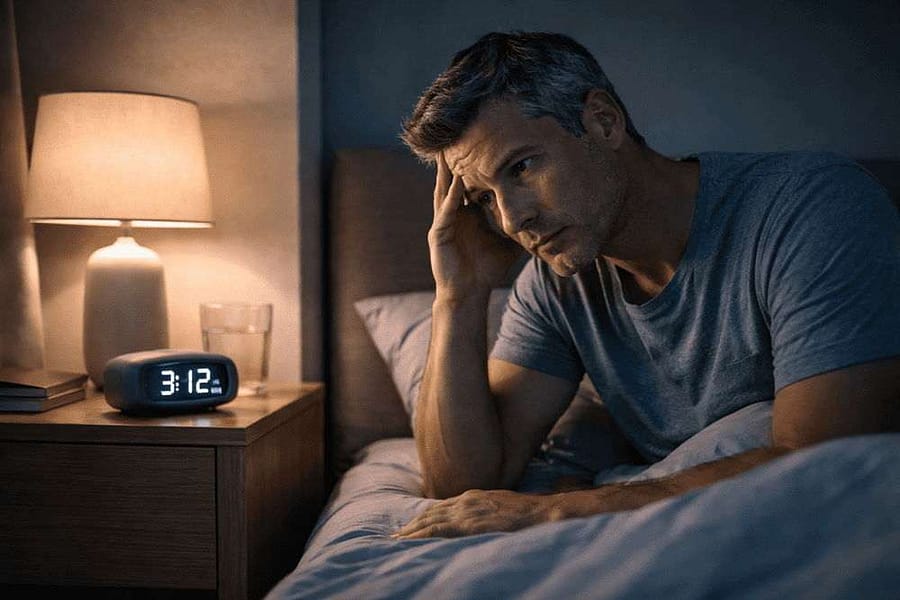
It is a phenomenon known to millions: you fall asleep easily at 10 PM, only to find yourself wide awake, staring at the ceiling, at exactly 3:00 AM. Your mind races, your heart beats a little faster, and sleep feels impossible. You are not just “bad at sleeping.” You are likely experiencing a biological event known as the nocturnal cortisol spike.
For decades, this “middle-of-the-night insomnia” was attributed to stress or a full bladder. However, modern sleep science reveals a complex interplay between blood sugar, body temperature, and stress hormones. Waking up at 3 AM is often your body’s emergency response to a physiological drop in resources. The good news is that by understanding the biology and leveraging smart home technology to control your environment, you can flatten this spike and reclaim the restorative deep sleep your body craves.
The Problem: The Biology of the “Wolf Hour”
Historically called “The Wolf Hour,” this window between 2:00 AM and 4:00 AM is when your body undergoes critical maintenance. The primary culprit for waking up is often metabolic.
Here is the typical cycle:
1. Glycogen Depletion: About four to five hours after your last meal, your liver runs out of glycogen (stored sugar) needed to fuel your brain during sleep.
2. The Stress Response: To keep your brain functioning, your adrenal glands release stress hormones—specifically cortisol and adrenaline—to trigger the release of stored energy.
3. The Wake-Up: This surge of adrenaline increases your heart rate and body temperature, physically jolting you out of deep sleep into a state of “fight or flight” alertness.
This internal alarm system is exacerbated by external factors. A bedroom that is too warm, streetlights bleeding through curtains, or sudden noises can lower your “arousal threshold,” making you susceptible to waking up at 3 AM even from minor internal fluctuations.
Benefits of Stabilizing Your Sleep Environment
Addressing the root causes of the cortisol spike does more than just help you sleep; it optimizes your long-term health. Using smart technology to regulate your sleep environment offers three distinct advantages:
1. Metabolic Regulation
Deep sleep is when the body regulates insulin sensitivity. By preventing the adrenaline surge, you reduce cravings for sugar the next day and lower the risk of Type 2 diabetes.
2. Cognitive Restoration
The hours between 2 AM and 5 AM are often rich in REM sleep, which processes emotions and memory. Uninterrupted sleep during this window prevents “brain fog” and emotional irritability.
3. Cardiovascular Health
Frequent night wakings keep your blood pressure elevated. Continuous sleep allows your cardiovascular system to dip into a low-stress state, reducing strain on the heart.
Device Categories: The Smart Sleep Sanctuary
While diet plays a role (eating a small protein/fat snack before bed can help), your environment is the most controllable variable. Here are the smart devices designed to counteract the triggers of waking up at 3 AM.
1. Smart Thermostats (The Temperature Anchor)
Your body temperature needs to drop by about 2–3 degrees Fahrenheit to initiate and maintain deep sleep. If your room stays warm (over 70°F), your body struggles to cool down, triggering a wake-up response.
The Solution: Devices like the Ecobee Premium or Google Nest Learning Thermostat.
Strategy: Set a schedule to drop the temperature to 65–68°F (18–20°C) starting at 10 PM. This external cooling signals your body that it is safe to stay in deep sleep.
2. Circadian Smart Lighting
Even tiny amounts of blue light (from street lamps or standby LEDs) can suppress melatonin. However, if you do wake up, turning on a bright bathroom light instantly resets your internal clock, making it impossible to fall back asleep.
The Solution: Philips Hue or LIFX smart bulbs.
Strategy: Program “Sleep Automation.” The lights should turn deep red or amber after sunset. If you must get up at 3 AM, motion sensors should trigger the lights at 1% brightness in a red hue, which does not disrupt melatonin production.
3. Automated Blackout Shades
Light pollution is a silent sleep killer. As dawn approaches (even pre-dawn), your body may sense the shift.
The Solution: Lutron Serena Shades or Eve MotionBlinds.
Strategy: Program them to close tightly at sunset and only open 15 minutes before your desired wake-up time. This ensures total darkness during the critical 3 AM window.
4. Advanced Sleep Trackers
You cannot fix what you cannot measure. You need to know if you are waking up due to noise, temperature, or heart rate spikes.
The Solution: Oura Ring or Whoop Strap.
Strategy: These wearables measure Heart Rate Variability (HRV) and skin temperature. If you see a spike in temperature at 3 AM every night, you know your room is too hot. If you see an HRV drop, it might be that glass of wine from dinner.
Buying Guide: Building Your Sleep Stack
When selecting technology to stop waking up at 3 AM, prioritize these features:
- Silent Operation: Ensure smart blinds have “whisper” motors. A loud motor at 6 AM is counterproductive.
- Red Light Capability: Not all “warm” lights are red. Look for bulbs that can hit 1500K–2000K color temperature.
- Matter Support: Ensure your devices (thermostat, lights, blinds) can talk to each other via a central platform like Apple HomeKit or Google Home for synchronized “Bedtime” scenes.
Frequently Asked Questions (FAQ)
Why is it always 3 AM specifically?
It aligns with your circadian rhythm. Around 3 AM, your core body temperature hits its lowest point, and your sleep drive (adenosine pressure) has partially dissipated. If your cortisol spikes at this vulnerable moment due to low blood sugar or stress, you wake up instantly.
Does alcohol cause the 3 AM wake-up?
Yes. Alcohol is a sedative initially, but as it metabolizes (usually 4–5 hours after drinking), it creates a “rebound effect,” releasing glutamate (an excitatory neurotransmitter) that jolts you awake, often with a racing heart.
Should I stay in bed if I wake up?
If you cannot fall back asleep within 20 minutes, get up. Lying in bed anxious creates a psychological link between the bed and stress. Go to a dim room (using red smart lights), read a boring book, and return only when tired.
Can smart speakers help me fall back asleep?
Yes. Playing “Green Noise” or “Brown Noise” (lower frequencies than White Noise) via an Echo or Nest Audio can mask environmental sounds and provide a soothing rhythmic backdrop to lower your heart rate.
Is this part of aging?
Sleep architecture changes as we age; we produce less melatonin and spend less time in deep sleep. This makes the “3 AM cortisol spike” more noticeable in adults over 40. However, environmental optimization can mitigate these effects significantly.
Conclusion
Waking up at 3 AM is not a character flaw; it is a physiological signal. It is your body telling you that its fuel is low, its temperature is off, or its stress load is too high. By understanding the mechanism of the cortisol spike and deploying smart home tools—like precise temperature control and circadian lighting—you can smooth out these biological bumps. You don’t have to dread the Wolf Hour. With the right strategy, you can sleep right through it.
📚 Mental Wellness & Stress Research Sources
- American Psychological Association (APA) – Stress Effects on Body
- Mayo Clinic – Stress Management Strategies
- Cleveland Clinic – Cortisol & Stress Response
Disclaimer
This information is for educational and informational purposes only and does not constitute professional advice. Always consult with a qualified professional before making any decisions based on this content.
About the Expert
Naomi Vance
Research Integrity Lead & Senior Health Editor at FactaHub
Naomi leads the Health & Wellness category, specializing in research validation, regulatory compliance, and translating complex medical studies into clear, trustworthy advice for everyday readers, ensuring the highest standards of accuracy for YMYL topics.
Important Medical Disclaimer
Naomi Vance is a highly qualified expert in research analysis and health information synthesis. However, she is not a licensed physician, pharmacist, or registered dietitian. All content published under her editorial oversight is provided for educational and informational purposes only. It is not intended to be a substitute for professional medical advice, diagnosis, or treatment from a qualified healthcare provider. Always seek the advice of your physician or other qualified health professional with any questions you may have regarding a medical condition or treatment.