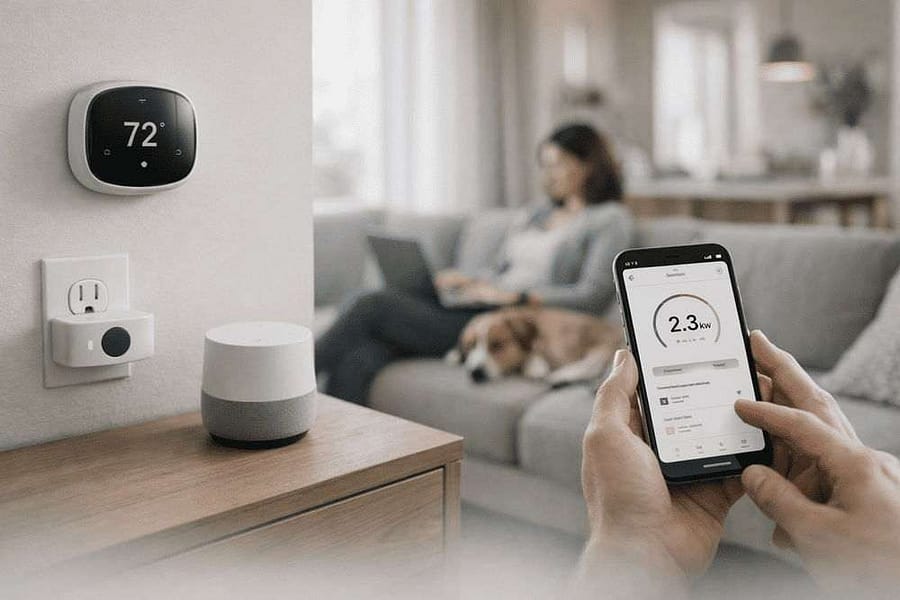
How Much Electricity Does a U.S. Home Use Per Day

How Much Electricity Does a U.S. Home Use Per Day? (My Real-World Experience)

Quick Answer: On average, a typical U.S. household consumes about 20–30 kWh of electricity per day. In my experience, my mid-sized home averages 22–26 kWh daily, though this fluctuates significantly depending on the season and HVAC usage. Why I Started Tracking My Energy Usage A few months ago, I noticed my utility bills were creeping higher than expected. I realized I had no idea where that energy was actually going.

How Much Electricity Does a U.S. Home Use Per Day? (My Real-World Experience)
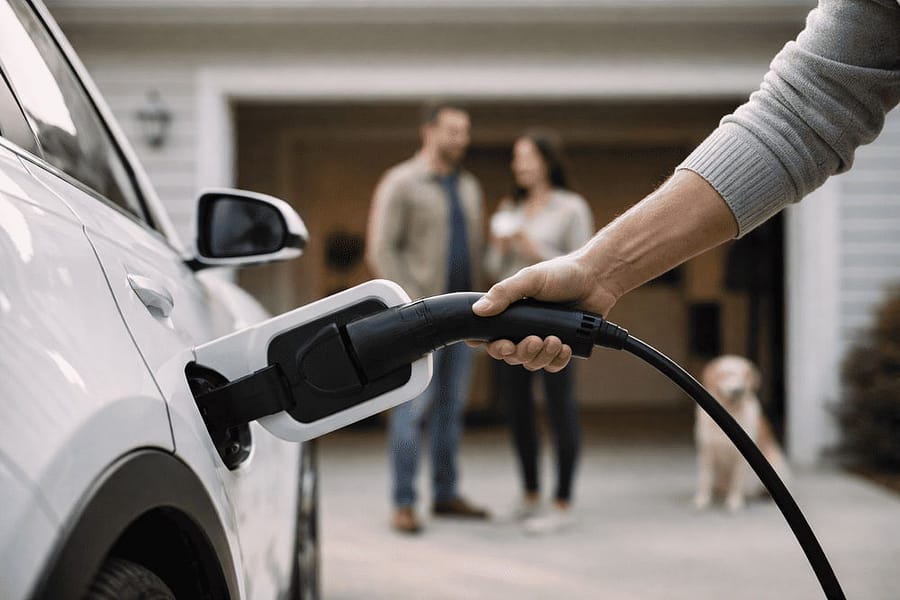
How Much Does It Cost to Charge an EV at Home in the U.S.

How Much Does It Cost to Charge an EV at Home in the U.S.? (My Real Experience)

Quick Answer: Based on my personal tracking, charging an electric vehicle (EV) at home in the U.S. typically costs between $10 and $15 for a full charge. On average, I spend about $4.50 per 100 miles, which is roughly 60-70% cheaper than driving a comparable gas-powered car. My Journey to Electric: From Skeptic to Believer When I first traded my internal combustion engine for an electric car, my biggest concern

How Much Does It Cost to Charge an EV at Home in the U.S.? (My Real Experience)

Can I Charge My EV From Home? (V2H & Bidirectional Charging Guide)

Can I Charge My EV From Home? (V2H & Bidirectional Charging Guide)

✔ Fact-checked. For informational purposes only. The short answer is yes—but a bidirectional EV charging system does much more than just charge your car. It fundamentally changes the relationship between your vehicle, your home, and the power grid. For decades, refueling was a one-way street: you put gas in a tank or electricity in a battery, and that was it. Today, with the rise of Vehicle-to-Home (V2H) technology, your electric

Can I Charge My EV From Home? (V2H & Bidirectional Charging Guide)

Is a Smart Home Device Worth Buying for Energy Savings in 2025?

Is a Smart Home Device Worth Buying for Energy Savings in 2026?

✔ Fact-checked. For informational purposes only. As utility rates continue to climb in 2026, the debate over home automation has shifted from “cool gadgets” to “cost-saving necessities.” With residential electricity consumption averaging over 10,000 kWh annually in the U.S., homeowners are increasingly looking toward technology to bridge the gap between comfort and conservation. Determining if a smart home device is worth the investment requires a clear look at the actual

Is a Smart Home Device Worth Buying for Energy Savings in 2026?